banner
Blog
Home

Blog

Metal Stamping vs CNC Machining: Which Process Is Best for Your Part?

Metal Stamping vs CNC Machining: Which Process Is Best for Your Part?

  • 2025-12-05

A Complete Guide for Engineers, Product Developers, and International Buyers


Manufacturers today have access to more fabrication processes than ever before. Among them, metal stamping and CNC machining are two of the most widely used methods for producing precision metal components across the electronics, automotive, lighting, telecommunications, and industrial sectors.

However, choosing the right process is not always straightforward. Each method has its strengths, limitations, and ideal application scenarios. Selecting the wrong process can lead to unnecessary costs, long lead times, quality issues, or performance failures.

This guide explains the key differences between metal stamping and CNC machining and helps you determine which process is best for your part — based on geometry, volume, tolerance, material, and cost requirements.


1. What Is Metal Stamping?

We won't go into detail about what metal stamping is here; we can find more information in our previous articles (Manufacturing Metal Stamping). We know that metal stamping processes transform metal sheets into precision parts through the following operations:
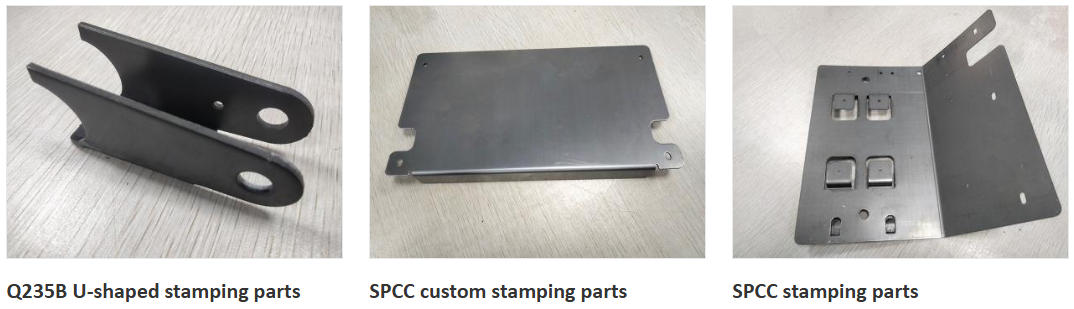

  • Blanking
  • Punching
  • Bending
  • Deep drawing
  • Coining
  • Embossing
Metal Stamping Parts


Metal stamping is ideal for high-volume production, especially when parts require consistent shapes, thin profiles, and repetitive geometries.


2.What Is CNC Machining?


CNC machining uses computer-controlled cutting tools to remove material from a solid block (metal bar, billet, or plate). Popular CNC processes include:

CNC milling
CNC turning
Drilling
Tapping

Unlike stamping, machining is a subtractive process. It excels at producing complex 3D shapes, precision holes, thick components, or parts requiring multiple surface angles and depths.

Common applications:
Precision housings
Fixtures and tooling components
Automotive or aerospace parts
Low-volume prototypes
Custom industrial components

CNC machining offers unmatched flexibility since no dedicated stamping dies are needed.


3.Cost Comparison: Stamping vs CNC Machining

Metal Stamping

High initial tooling cost (depending on geometry)
Very low cost per piece after tooling
Best for: medium to high-volume production
CNC Machining
No tooling cost
Higher cost per piece, especially for complex geometry
Best for: prototypes or low-volume production

If your order volume exceeds 10,000–20,000 pieces annually, stamping is usually the more economical choice.


4.Precision & Tolerance: What Engineers Should Know

Tolerance capability is often a deciding factor in choosing a manufacturing process.

Metal Stamping Tolerance
Typical tolerances: ±0.02–0.05 mm (depending on geometry & material)
Best for thin, flat, or formed sheet metal structures
Excellent repeatability in mass production
CNC Machining Tolerance
Typical tolerances: ±0.005–0.02 mm
Capable of extremely precise dimensional control
Better for thick, structural, or multi-axis parts

If your design requires extremely tight tolerance across multiple planes, machining is likely the better fit.


5.Material Considerations

Both processes support a wide range of materials:

Metal Stamping Compatible Materials
Stainless steel (SS301, SS304, SS316)
Carbon steel
Copper & copper alloys (C1100, C2680, phosphor bronze)
Aluminum
Nickel alloys
Stamping requires materials with good ductility to ensure clean punching and forming.
CNC Machining Compatible Materials
All metals above
Harder alloys (tool steel, titanium, etc.)
Plastics (POM, nylon, acrylic)

Because machining removes material rather than forming it, material ductility is less critical.


6.Part Geometry: The Most Important Factor

Metal stamping is ideal for:

Flat, thin, or shallow 3D parts
Parts with repetitive geometric patterns (holes, tabs, bends)
Components under 3 mm thickness
High-volume parts needing consistent repeatability

CNC machining is ideal for:
Thick or solid 3D components
Complex internal cavities
Deep holes or threads
Multi-angle, multi-surface requirements
Low-volume or prototype builds

Rule of thumb:
If the part starts as sheet metal and maintains uniform thickness, choose stamping.

If the part requires material removal and multi-directional shaping, choose CNC.


7.Production Speed & Lead Time

Metal Stamping Lead Time
Tooling: 2–5 weeks (depending on complexity)
Production: extremely fast, ideal for millions of parts
Best for stable, long-term production
CNC Machining Lead Time
No tooling needed

Production time depends on cycle time per part

Suitable for urgent or small batch orders


8.Quality Consistency & Scalability

Stamping

✔ Excellent consistency
✔ Ideal for automated production
✔ Minimal dimensional variation
✔ Cost decreases as volume increases

Machining

✔ Excellent precision
✔ Flexibility for design changes
✘ Higher variation between batches
✘ Cost remains relatively high even at scale


9.Environmental & Waste Considerations


Metal Stamping

Produces scrap from punching
Scrap material can be recycled
Energy efficient due to high-speed presses

CNC Machining
Higher material waste due to cutting
Chip recycling requires additional processes
Longer machining time = more energy consumption

Stamping is generally more sustainable for high-volume production.


10.Which Process Should You Choose?

Below is a simplified decision guide:


Requirement
Best Process
High-volume production
Metal Stamping
Low-volume / prototypes
CNC Machining
Lowest cost per part
Metal Stamping
No tooling budget
CNC Machining
Ultra-tight tolerances
CNC Machining
Thin sheet metal parts
Metal Stamping
Complex 3D geometry
CNC Machining
Fast mass production
Metal Stamping

* In many real projects, both processes are combined, for example, stamping the outer geometry and machining critical features.


11.Why Many Overseas Buyers Choose Metal Stamping Partners in China


International customers often choose Chinese metal stamping suppliers because of:

Mature tooling & die-making ecosystem
Competitive cost structure
Skilled workforce and automated equipment
Stable raw material availability
Ability to scale from prototype to mass production

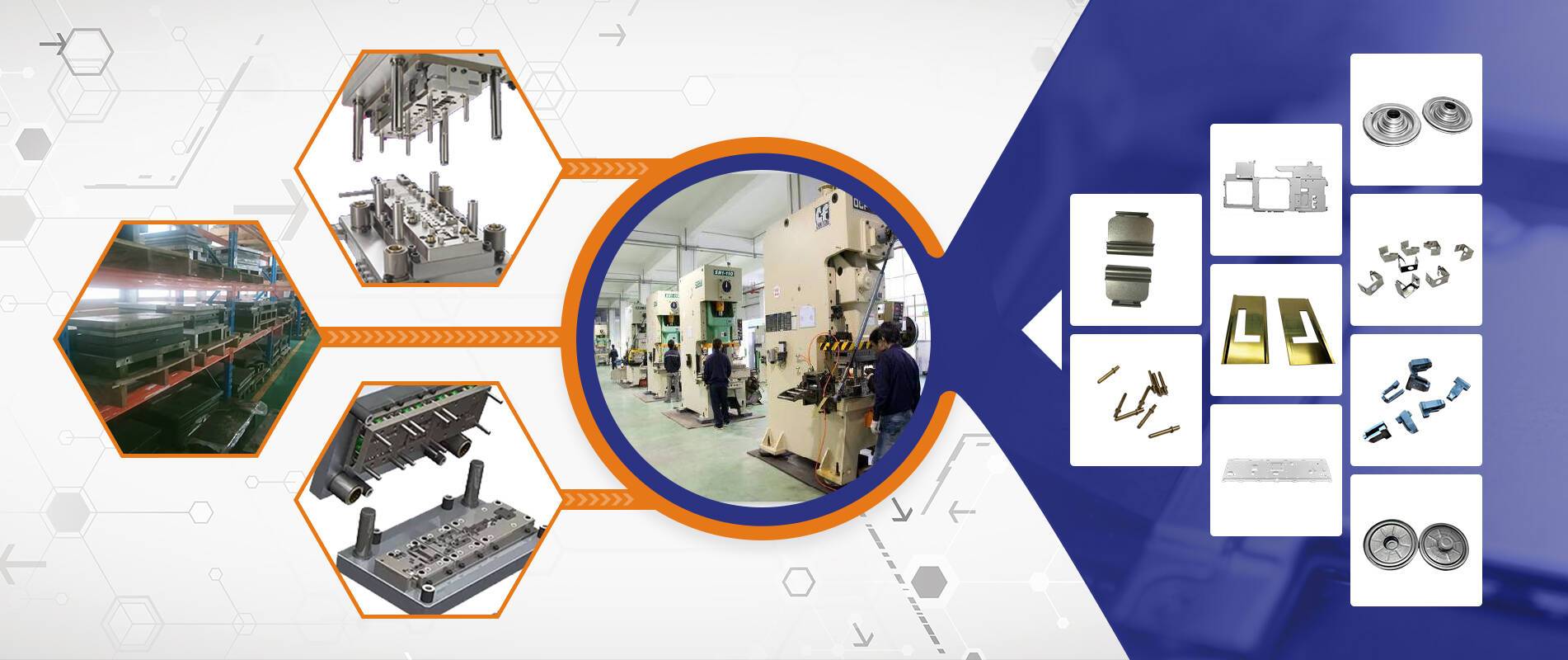
For example, manufacturers like Jiaxin (Xiamen) Precise Metal Co., Ltd. support customers with:
23+ years stamping experience
1000 & 10,000 class cleanroom production
In-house tooling and engineering team
ISO-certified quality control
High-precision presses and inspection equipment

Custom OEM/ODM support for global clients

Jiaxin (Xiamen) Precise Metal Co., Ltd.


Both metal stamping and CNC machining are powerful and reliable manufacturing processes. The right choice depends on your part’s geometry, tolerance, material, budget, and production volume.

If you need high-volume, thin, and repeatable metal parts, stamping is almost always the better choice.
If your parts require complex 3D geometry or extremely tight tolerances, CNC machining is more suitable.
A professional supplier can help evaluate your drawings, material selection, tolerance requirements, and cost targets to recommend the optimal process or a combination of both.


Related articles here:


Manufacturing Metal Stamping

Benefits of Custom Metal Stamping Parts for Automotive, Lighting, and Household Appliances

How Precision Stamping Helps Reduce Production Costs and Improve Efficiency


© Copyright: 2025 Jiaxin (Xiamen) Precise Metal Co.,Ltd. All Rights Reserved

IPv6 network supported

top

Leave A Message

Leave A Message

    If you are interested in our products and want to know more details,please leave a message here,we will reply you as soon as we can.