Metal Stamping Parts Deep Draw Versus Progressive Die Guide
You choose Deep Draw Stamping for seamless, hollow metal stamping parts requiring high depth-to-diameter ratios. Alternatively, you select Progressive Die Stamping for high-speed production of flat components with complex features. Continuous carrier strips constrain progressive part depth. Therefore, you must evaluate tooling capital expenditure, material scrap rates, and total annual production volumes carefully.
Deep draw stamping transforms flat sheet metal blanks into seamless, hollow cylindrical or rectangular components. You feed individual blanks into the press without attachment to a web or continuous strip. A mechanical punch forces the blank into a matching die cavity. The metal flows plastically over the draw radius, drawing material into the vertical walls while maintaining structural integrity.
Uncoupling the blank from a carrier strip eliminates lateral tension during the draw stroke. You can achieve deep depth-to-diameter ratios without tearing the material or compromising wall thickness. Secondary operations such as trimming, beading, or flanging can occur across multiple dedicated stations. This process optimizes material yield and delivers high-strength, leak-proof geometries suitable for fluid containment and pressure vessels.
Progressive die stamping feeds a continuous coil of sheet metal through a series of aligned die stations. A central carrier strip holds the growing part firmly as index pins position the metal at each press stroke. Every station performs specific operations like punching, coining, embossing, or bending. The final station cuts the fully formed component directly from the carrier ribbon.
This sequential method excels at rapid, high-volume production of smaller metal stamping parts with complex geometric features. However, the rigid carrier strip restricts maximum draw depth. Transfer die systems present a strong alternative when your design exceeds progressive depth limits or requires heavy tonnage. Transfer dies move individual parts between separate presses using mechanical arms, bridging the gap between progressive speed and deep draw capabilities.
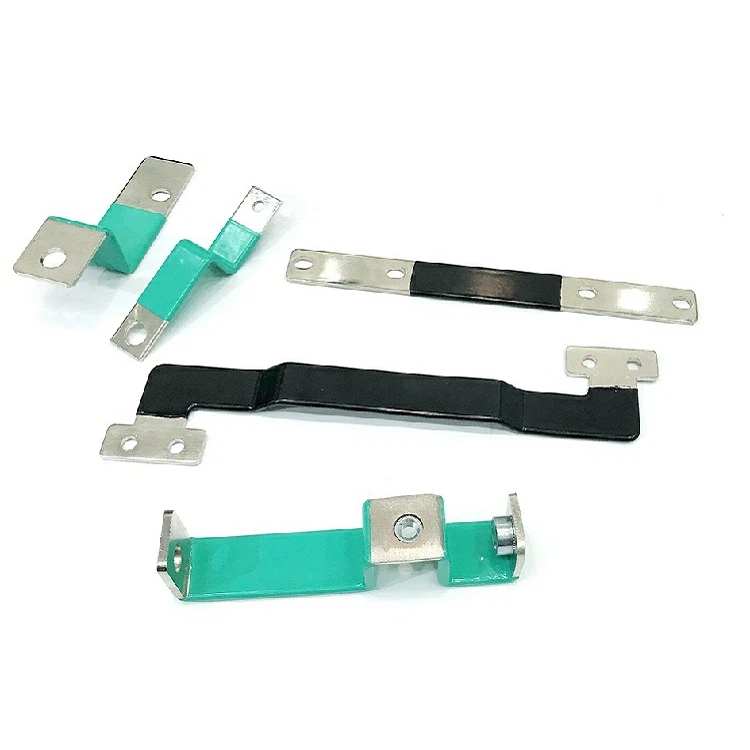
You must analyze the depth-to-diameter ratio when evaluating technical constraints for complex components. Progressive die systems move continuous metal coils through sequential stations using an integrated web of material. This carrier strip holds each feature in precise alignment throughout the entire stamping cycle. However, the carrier strip imposes strict mechanical limitations on maximum draw depth. Deep vertical forming pulls metal directly from surrounding zones during the press stroke. Excessive draw depth stretches the connecting web, deforms the carrier strip, and destroys progression pitch accuracy. Consequently, progressive dies perform best when you produce shallow features, flat profiles, or gentle structural contours across thin sheet metal.
Deep draw stamping eliminates carrier strip limitations completely. You feed individual sheet metal blanks directly into the die cavity without an attached supporting ribbon. The mechanical punch forces material smoothly from the blank periphery into the matrix. The metal flows plastically under controlled blank holder pressure without lateral tension from a continuous strip. You achieve significantly higher depth-to-diameter ratios in a single stroke or through systematic redrawing steps. You should select deep draw stamping whenever your geometry demands deep, seamless cylindrical walls, smooth fluid containers, or tall rectangular enclosures without structural seams or weak joint lines.
Part features and dimensional tolerances heavily influence your selection between progressive dies and deep draw systems. Progressive die tooling maintains exceptional feature-to-feature tolerances across complex multi-station operations. Hardened pilot pins engage pre-punched location holes at every station, locking the metal strip into exact mechanical alignment throughout press strokes. You can easily integrate high-speed punching, notch cutting, thread tapping, side bending, and fine coining within one continuous tool setup. This integrated tooling method guarantees tight pitch control and superior hole-to-hole location accuracy for intricate electronic connectors, automotive brackets, and precision hardware.
Progressive die stamping delivers superior dimensional accuracy for multi-feature components, while deep draw processes maximize structural uniformity across deep vertical walls.
Material yield calculation profoundly impacts your long-term unit economics and overall manufacturing budget. Progressive dies require continuous carrier ribbons and web skeleton scrap to transport components securely between workstations. This extra carrier material increases raw coil consumption and generates higher scrap volume across every production run. In contrast, deep draw processes utilize optimized circular or rectangular blanks. You cut individual blanks efficiently to minimize material off-fall before primary forming operations begin. High material yield lowers your overall raw material expenditure, especially when you manufacture high-volume metal stamping parts from premium alloys like stainless steel, copper, brass, or specialized aerospace aluminum alloys.
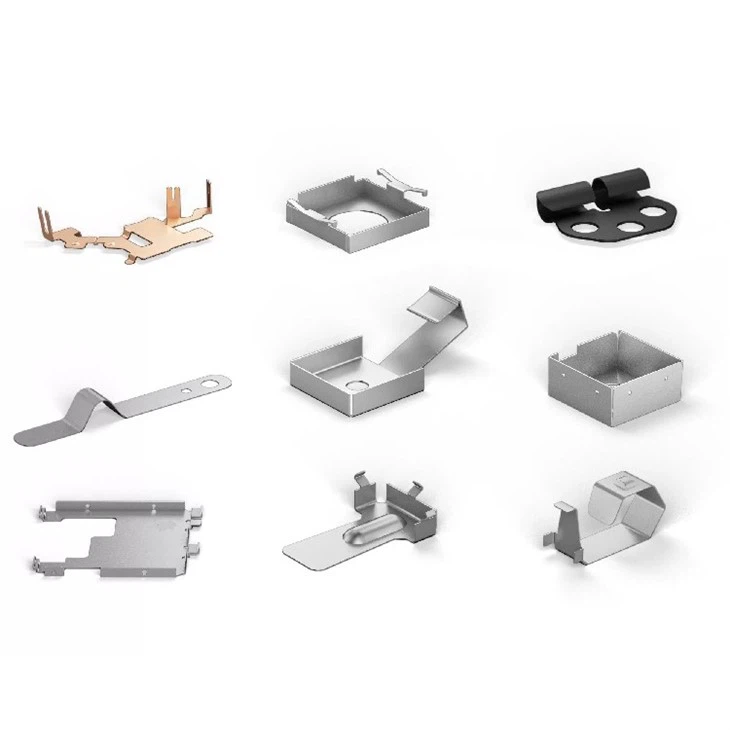
You must balance initial capital expenditures against long-term piece costs when selecting a manufacturing process. Progressive dies require significantly higher upfront tooling investments. Toolmakers must craft multiple precision stations from hardened tool steel, integrating pilot pins, complex punch blocks, and intricate strip lifters into a single heavy-duty die set. This custom mechanical engineering elevates original tooling expenses substantially. Deep draw tooling generally requires lower initial capital outlay because basic standalone draw dies feature simpler geometric configurations with fewer moving mechanical components. You pay less upfront for single-action or double-action draw dies.
|
Tooling Evaluation Factor |
Deep Draw Stamping |
Progressive Die Stamping |
|---|---|---|
|
Upfront Capital Expenditure |
Lower initial investment |
Higher initial investment |
|
Press Cycle Output |
Lower stroke rate per single unit |
High-speed multi-feature output |
|
Operational Labor Cost |
Higher handling per station |
Minimal automated operator labor |
|
Ideal Unit Cost Efficiency |
Low-to-medium production runs |
High-to-ultra-high production volumes |
Piece price calculations reveal the economic trade-off between these two stamping methods. Progressive dies complete intricate part geometries in a single continuous press stroke. High stroke rates and minimal manual labor rapidly depress the variable cost per unit during long manufacturing cycles. Deep draw operations often require multiple individual draw steps, intermediate annealing cycles, or secondary trimming operations across dedicated stations. These added production steps increase machine cycle times, transfer overhead, and total labor inputs. Consequently, progressive stamping yields a significantly lower piece price during extended production runs, quickly amortizing the larger initial tooling expense.
Annual production volume dictates your optimal tooling strategy. Low production volumes rarely justify the substantial capital investment of complex progressive tooling. You achieve better cost recovery using lower-cost deep draw dies for smaller order quantities, engineering revisions, or prototype development. High production thresholds invert this financial dynamic completely. Massive order volumes allow you to absorb high initial tooling expenditures easily across millions of finished components. You reduce overall financial risk by calculating the total cost of ownership before committing to specific tool designs.
Progressive deep drawing provides powerful production advantages for high-volume metal stamping parts. Engineering teams design custom multi-cavity progressive dies to stamp multiple components simultaneously with each single press stroke. These advanced dies combine deep drawn cup features with complex lateral hole punches, embossed structural ribs, and precision edge cutouts within one continuous strip. Using multiple cavities per shot doubles or triples total press throughput without increasing press stroke frequency. Multi-stage progressive forming lowers individual unit prices dramatically, maximizing overall press efficiency and providing substantial long-term cost savings for large-scale manufacturing operations.
You should select deep draw stamping when your part design requires a draw depth that exceeds its total diameter or deforms the continuous carrier web during progressive forming.
Progressive dies perform shallow drawing operations effectively. However, you cannot achieve deep seamless hollow shapes without tearing the continuous material carrier ribbon during high-speed production strokes.
Deep draw stamping utilizes pre-cut blank shapes to minimize waste. Progressive die stamping generates higher scrap volume because the process requires continuous carrier strips and inter-station web skeletons.
Categories
latest blog
 33#Building Huli Industrial Zones, Meixi Road, Xike Town, Tong'an Area, Xiamen,China


© Copyright: 2026 Jiaxin (Xiamen) Precise Metal Co.,Ltd. All Rights Reserved

IPv6 network supported
Scan to WhatsApp

 English